

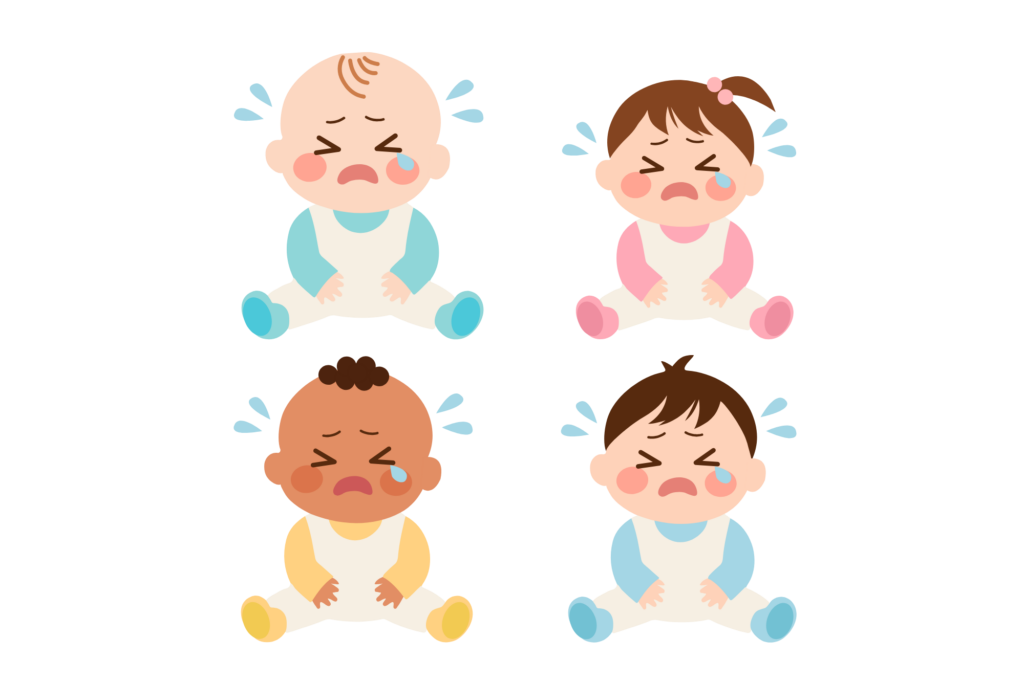
Babies are all different. They have their own likes and dislikes and show their needs in their own ways. Over time, many parents learn what their baby’s cries mean, and babies learn how their parent responds.
There is no guide that explains every cry. Instead, parents learn as they go. This can take more time for some parents, and that is okay. The resources below and the team at Together with Baby can help you understand your baby’s communication and build a closer bond.
One main way babies communicate is by crying. Crying is how they tell their caregiver they need something. These are called ‘cues’.
A baby’s needs can be physical, such as being hungry, wet, tired, or having a sore tummy. They can also be emotional or social, such as needing comfort, attention, or play.
Physical needs
- Hungry
- Tired
- Wet nappy
- Pain or discomfort
- Constipated
- Wind
- Reflux
- Too hot or too cold
Emotional needs
- Affection and comfort – kisses/ cuddles/ touch
- Connection and interaction – seeing caregivers face/ hearing their voice/ receiving joy and delight
- A sense of safety in their environment
- Gentle sensory input from the world
- Finished with playtime
- A sense of safety in their environment
- Gentle sensory input from the world
- Finished with playtime
- Wanting more playtime
Babies are unique individuals with their own likes and dislikes and will all express their needs in their own ways. Over time many parents will begin to learn what their baby’s cries mean and baby will learn about how their parent responds to them.
Because of this, there is no manual to tell us exactly what our baby’s cries mean and it is instead we ‘learn on the job’. This might feel harder or take a little longer for some parents and that’s okay. The resources below and the team at Together with Baby can help you better understand your baby’s communication and build a stronger connection with each other.
Thinking about your baby’s transition from being in the womb to being in the world can be helpful for understanding their cries. Your baby is learning all about their new environment and how you as their caregiver can meet their needs.
Each day they are finding out how to attach, survive, and adapt to their new world. Your baby is learning as much about your behaviour and responses to them as you are about theirs!
In the womb babies have all their needs met with minimal effort. For example, babies in the womb are:
- Fed without effort
- Constantly connected to their caregiver
- In a warm & cosy environment
- Protected from harsh loud sounds as they are muffled
- Protected from harsh bright lights as they are in darkness
- Soothed by their mothers’ movements and the amniotic fluid which feels nice against skin
- In an environment that is largely consistent and predictable
How might it feel coming into the world after being in the womb?
Our environment is very different and babies will be exposed to lots of new sensory and social input. From the moment they are born, babies need to learn about their new environment to build a sense of safety and ensure their needs are met.
Some example of new experiences are:
- The brightness of lights
- Loud sounds
- New faces and voices
- New sensations – clothing, materials, people’s hands, gravity
- Stretching limbs out
- Needing to signal their needs to their caregiver and learning what responses they will get
/list
- If you’re breastfeeding, let your baby suckle at your breast.
- Having some gentle noise in the background may help distract your baby.
- Some older babies like to use a bit of cloth or a blanket as a comforter.
- Hold your baby or put them in a sling so they’re close to you. Move about gently, sway and dance, talk to them and sing.
- Rock your baby backwards and forwards in the pram, or go out for a walk or a drive. But limit how long your baby sleeps in a car seat to up to 30 minutes for newborns and up to 2 hours for babies. Even if they wake up again when you stop, at least you’ll have had a break.
- Find something for them to listen to or look at. This could be music on the radio, a CD, a rattle, or a mobile above the cot.
- Try stroking your baby’s back firmly and rhythmically, holding them against you or lying face downwards on your lap.
- Baby massage – undress your baby and massage them gently and firmly. Avoid using any oils or lotions until your baby’s at least a month old. Talk soothingly as you do it and keep the room warm enough. Some health centres and clinics run baby massage courses. For information, ask your midwife or health visitor.
- Try a warm bath. This calms some babies instantly, but makes others cry even more.
- Sometimes too much rocking and singing can keep your baby awake. You might find lying them down after a feed will help.
- Change the environment/ temperature – go for a walk/step outside
It is normal to feel sad or frustrated when your baby is crying and it’s expected that sometimes it will feel overwhelming. We all bring our own experiences into parenthood and there are certain aspects of parenting that will feel harder for some than others.
Working with your Together with Baby therapist can help you understand why some feelings or parts of parenting feel harder for you. For now, there are some resources below that you might find helpful for thinking about why it feels so hard to hear your baby crying.
When our baby is crying and expressing their needs it can activate difficult feelings within us as parents. This video explains the idea of “shark music” and how we can manage when faced with those difficult feelings.
Being in public with a crying baby can activate worries about drawing attention to ourselves, disturbing others, feeling like others think we are a bad parent.
How can we challenge this? What might other people actually think? What would you say to a friend who is struggling with their baby’s cries?