

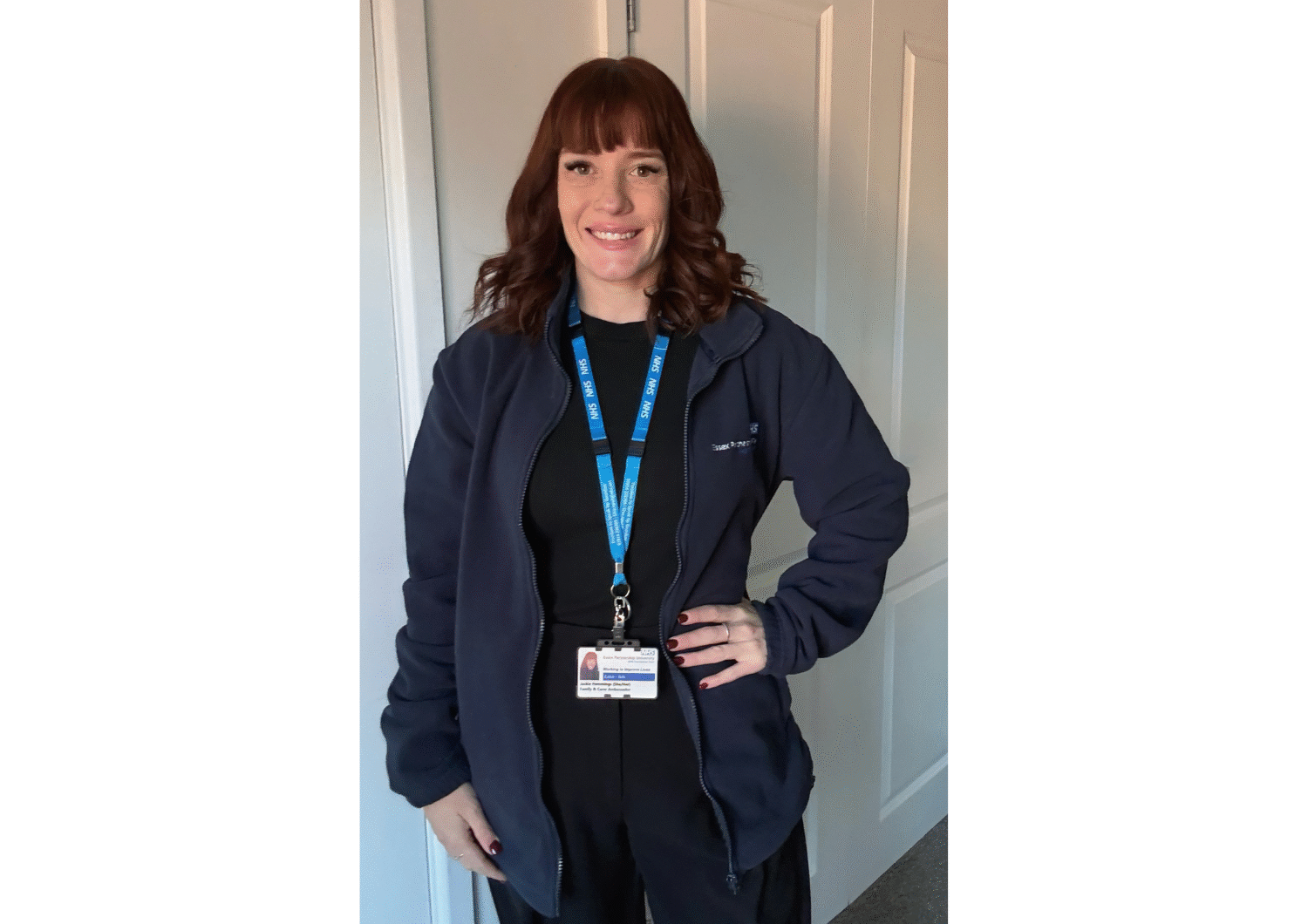
A mum who faced trauma and mental health struggles as a child is using her personal experiences to support the families of young people receiving mental health care.
Jackie Hemmings is a Family and Carer Ambassador at the St Aubyn Centre in Colchester, which provides mental health inpatient care for teenagers aged 13 to 18.
The service is run by Essex Partnership University NHS Foundation Trust, which has recruited Family and Carer Ambassadors to its inpatient mental health wards to ensure families are supported and have a voice in their loved ones’ care.
They are among 339 additional staff who have been recruited to expand the skills and experience within the inpatient mental health teams. It is part of our Time to Care programme, which enables staff to focus more time on providing personalised care and therapeutic activities for patients.
As a Family and Carer Ambassador, Jackie is a main point of contact for families and carers.
She explains the hospital’s processes, helps them understand the care and treatment their child will receive, and makes sure their views are heard.
Jackie works closely with the staff providing care for the young people and co-runs a parent and carer group with the therapists. Her work enables the medical team and therapists to focus on caring for their young patients, while making sure families are also supported.
She said: “Family and Carer Ambassadors are not clinically trained, we are very informal and our life experiences mean we have a lot of empathy for what families are going through.
“We’re here for the families to be heard and listened to.”
Jackie’s passion for her work stems from her own experiences. She experienced several traumatic events as a child, including the death of her father when she was 10. She also spent time in foster care.
The impact led to her being admitted for mental health inpatient care several times from the age of 18.
Jackie, who lives in Harwich, said: “My inpatient journey was a positive experience, even though it didn’t feel like it at the time.
“The inpatient process is scary, I felt very vulnerable. It’s not until I reflect back now that I see the therapy and dialectical behaviour therapy skills have had a positive impact and I have grown with it.
“Whether you are a family member or a patient yourself, you feel hopeless and you feel you are not going to get better, that you are at the end of the road.
“I tell families your young person may be poorly now, they may go back a few steps and forward a few steps, but most of the time there’s a positive story at the end. It’s important they know they have a future.”
Jackie said her own experiences have shaped who she is today and her drive to help other people.
She said: “Those days felt dark and endless but I am proof there is hope.
“Having also grown up in social care for a period of my life, I know first-hand how uncertain and inconsistent the future can feel.
“Today, I stand as living proof that with support, resilience, and opportunity, it is possible to move beyond those circumstances and thrive.
“I am now a wife, a mother of two wonderful children, and someone who loves her job -something I didn’t ever dare dream of.
“Alongside my ambassador role, I am also training to be a first responder for my local town, using both my lived and professional experience to help families and carers feel heard, supported, and less alone.”
Michelle Hill, Team lead for Family and Carer Ambassadors and Peer Workers in the Trust’s children and young people’s mental health wards, said: “I feel extremely grateful to be able to work within a team where we all have shared, similar lived experiences.
“Everything we do is with the patients, families, and carers at the forefront. We have an empathetic and compassionate approach, whilst validating the experiences and difficulties they are having.
“For those that we support, the feeling that you have been heard and seen without judgement is fundamental.
“It helps to build those positive relationships and helps to empower them to have a say in the decision-making around care and planning.
“Having lived experience teams working alongside the multi-disciplinary team creates a dynamic and forward-thinking approach to care.”