

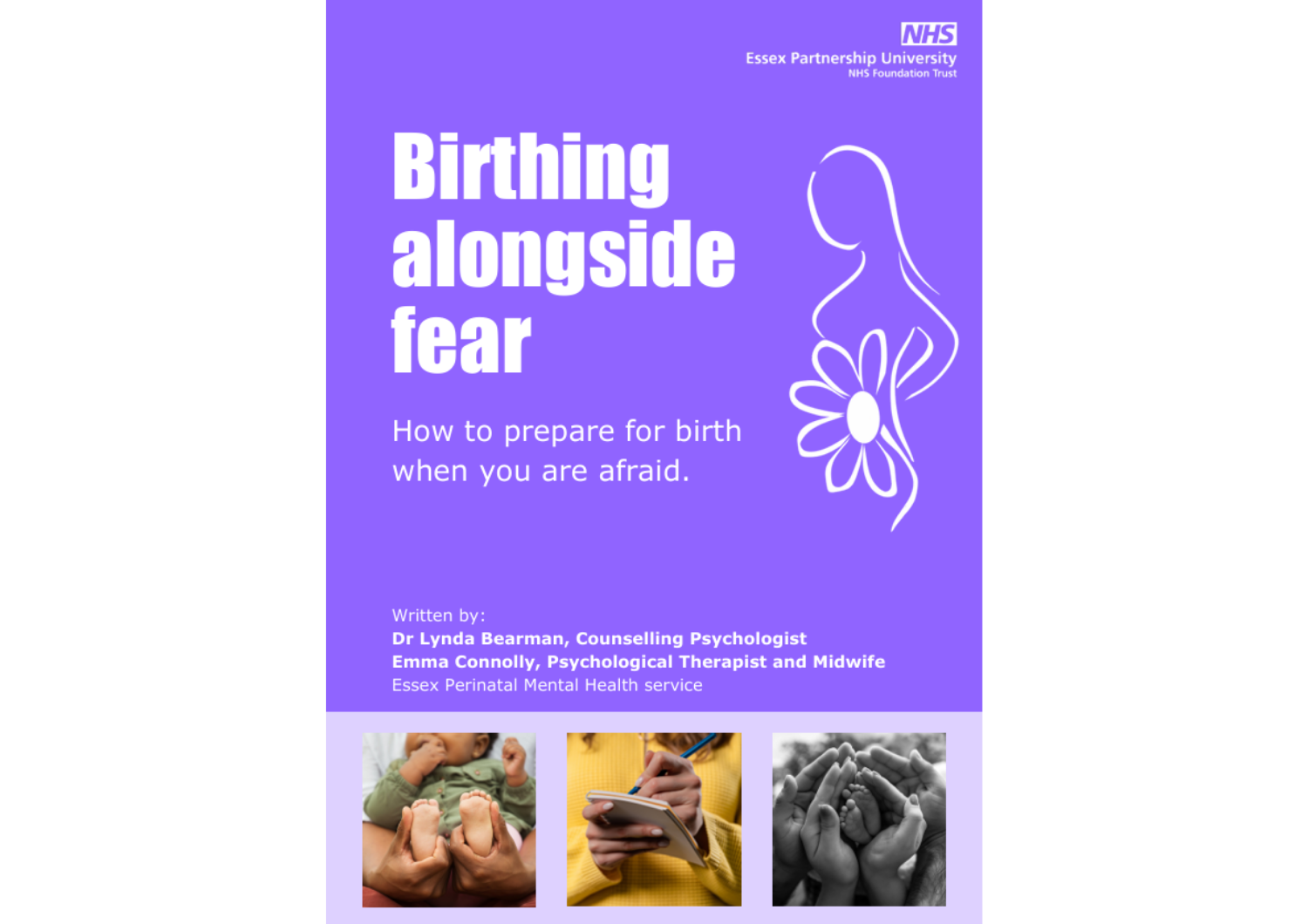
To mark Maternal Mental Health Awareness Week (4 to 10 May), clinicians from Essex Partnership University NHS Foundation Trust (EPUT) are shining a light on the impact of severe fear of childbirth and their innovative new resource, Birthing Alongside Fear.

Developed by Dr Lynda Bearman, Counselling Psychologist, and Emma Connolly, Psychological Therapist and Midwife, the booklet is designed to support women experiencing tokophobia – a severe and often misunderstood fear of childbirth.

While it is common for women to feel some anxiety about giving birth, tokophobia can have a profound effect on mental health and wellbeing. It may lead to avoidance of pregnancy, intense anxiety or depression, and difficulties bonding with a baby. The condition can be linked to previous traumatic experiences, pregnancy loss, neurodiversity, or longstanding fears.
The Birthing Alongside Fear booklet has been co-produced with people with lived experience alongside maternity and mental health professionals. It provides practical tools and compassionate guidance to help women understand their fears, explore birth options, communicate their needs, and access appropriate support.
The booklet forms part of a wider programme of work led by Lynda and Emma to improve early identification and support for women with fears of childbirth. This includes the development of a new care pathway across perinatal mental health and maternity services in Essex, alongside staff training and the introduction of early screening tools.
Dr Lynda Bearman said: “Maternal Mental Health Awareness Week is an important opportunity to highlight experiences that often go unseen. Severe fear of childbirth can be incredibly isolating, and many women struggle to access the right support at the right time. Through this booklet and our wider work, we want to ensure people are identified earlier and feel supported, informed and empowered throughout their pregnancy.”
Emma Connolly added: “Women often don’t feel able to talk about their fears until very late in pregnancy, if at all. This resource creates a safe and accessible way for those fears to be recognised and explored. It’s about making sure women feel heard, and that care is compassionate, inclusive and trauma-informed.”
The booklet also reflects the diverse experiences that can shape fear of childbirth, including the perspectives of minoritised communities, and has been developed in collaboration with community groups to ensure it is inclusive and representative.
Currently in use within Essex Perinatal Mental Health Services, Birthing Alongside Fear has also been rolled out more widely to support women and families and it can be accessed on the EPUT website.
Lynda and Emma’s work is a powerful example of how EPUT is delivering on one of its core priorities; to provide personalised, inclusive mental health support for all. By recognising the wider social, psychological and lived factors that shape a person’s health, not just their diagnosis, their approach ensures care is truly holistic and responsive to individual needs.
Central to this is EPUT’s commitment to co-designing services alongside the people who use them. Birthing Alongside Fear has been shaped by lived experience as well as clinical expertise.
Together, this work highlights how compassionate, collaborative and person-centred approaches can lead to more meaningful support and better outcomes for women and families.
Information about EPUT
- EPUT has a vision to be the leading health and wellbeing service in the provision of mental health and community care: Who we are – Essex Partnership University NHS Foundation Trust
- EPUT provides services to more than 100,000 patients at any one time and our staff are focused on providing high quality care in often complex situations.
- The organisation has invested in inpatient facilities and community services to make them safer and more therapeutic. We have extensively invested in technology to keep patients safer, enhanced training, and are continuously working with our staff, patients, their families and carers to use learning and best practice to enhance our quality of care.
- While there is more to do, the Trust has made significant progress through innovation:
- Our 111 mental health crisis phone line ensures people in need can access support 24 hours a day, 365 days a year
- People with lived experience have been employed in designated roles across the Trust, ensuring patient voice is heart of the organisation and all that we do.
- A number of new initiatives have been launched, helping people access the support they need when they need it most. These include a mental health urgent care department, By Your Side maternal mental health service, Rough Sleeper team, mental health crisis ambulance cars, virtual wards and neuromodulation service.
- EPUT was formed on 1 April 2017 and provides community health, mental health and learning disability services across Essex, Luton and Bedfordshire and Suffolk. We employ more than 7,200 staff working across more than 200 sites.
- To read more about our priorities and commitments to deliver the highest quality and safest care possible, visit https://eput.nhs.uk/about-us/2023-2028-strategic-plan/