

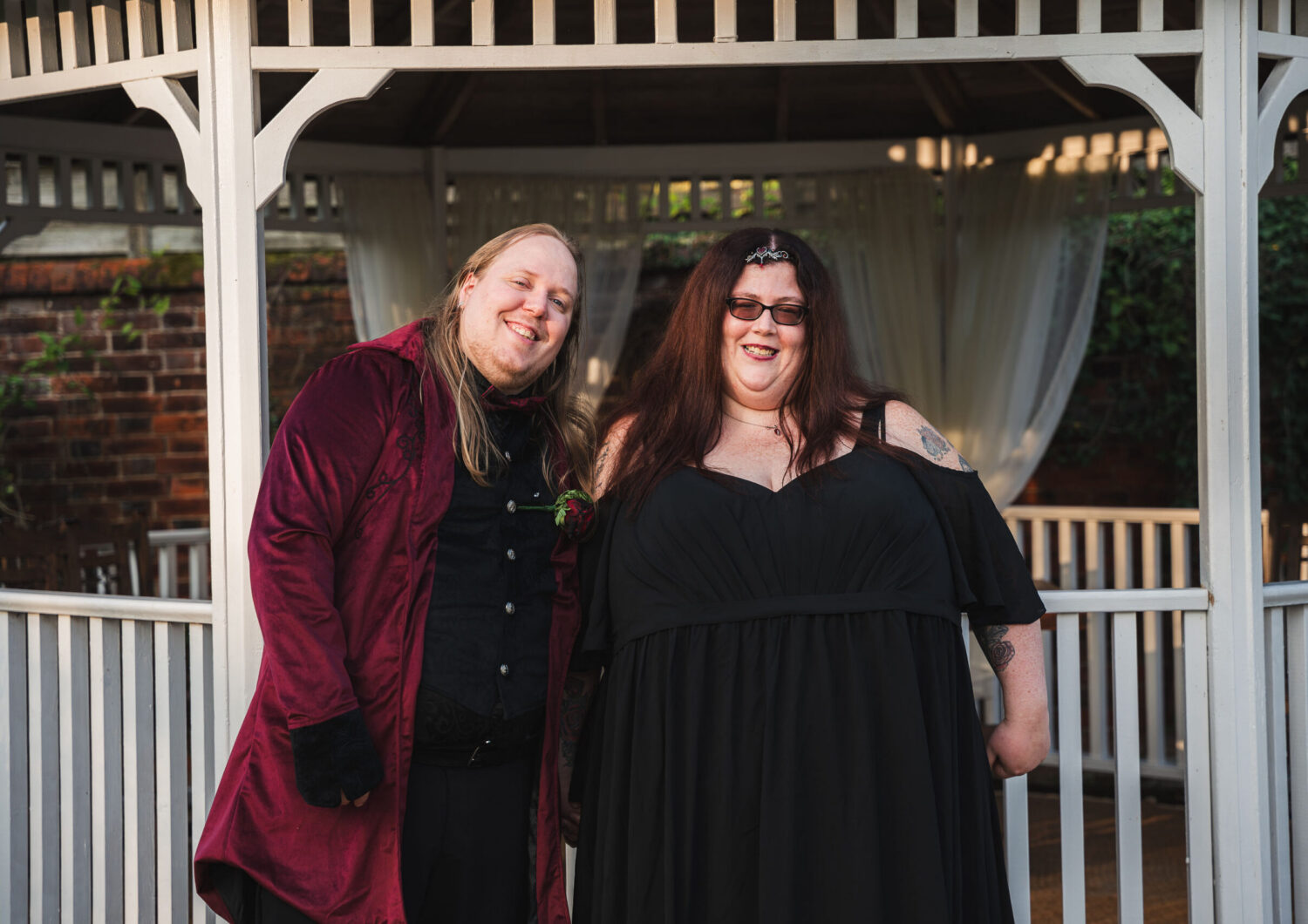
A peer worker who has overcome personal adversity is using his experiences to support patients receiving mental health care at Rochford Hospital.
Michael Armstrong-Ingram is one of more than 400 people at Essex Partnership University NHS Foundation Trust who draw on their lived experience to support others through their treatment journeys.
Michael brings deep personal understanding to his role supporting adult patients on Willow ward. His journey into peer support was shaped by lived experience and encouragement from his wife Kirsty, who also works as a peer worker for EPUT, after she recognised how his experiences and empathy could help others. Together, they share a commitment to using lived experience to support others through mental ill health.
Michael’s early life was marked by significant adversity. He developed severe migraines at a young age, which were later found to be linked to a rare and life-threatening cerebral aneurysm diagnosed in his teens.
The diagnosis led to complex and ongoing treatment, including major neurosurgery and long-term monitoring, with periods of uncertainty about his future. At the same time, he experienced long-term mental health difficulties.
Over time, Michael developed severe depression and experienced suicidal crisis. He has since engaged in therapy, including cognitive behavioural therapy, which helped him begin to recognise his own value and recover a sense of hope.
“These experiences have shaped how I see people,” Michael says. “I know what it feels like to believe you don’t matter, or that this is just how life is.”
Before joining EPUT, Michael worked as a games developer and ran his own business, which he continues alongside his role at EPUT.
In his role as a peer worker, Michael uses his insight to connect with patients who may feel frightened, misunderstood or find it difficult to trust clinicians. He spends time talking with patients, observing day-to-day changes in mood and behaviour, and offering emotional support alongside the clinical team.
He has supported patients in setting up daily routines, particularly autistic patients, which can help them feel calmer and safer both on the ward and at home. He also talks with doctors and nurses about what he notices so care plans better meet each patient’s needs.
Peer workers also play an important role in supporting the wider clinical team which can include psychologists, psychiatrists, occupational therapists and more. At patients’ request, Michael accompanies them to meetings with clinicians to help explain information, reduce anxiety and ensure patients feel heard.
“Patients can be very anxious in clinical meetings and may hear things negatively,” Michael explains. “I can help translate what’s being said into something that feels manageable. That makes a huge difference to patients.”
For Michael, the most meaningful part of his work is helping people rediscover their sense of worth.
“So many people believe they deserve pain or that things won’t change,” he says. “If I can help someone feel seen and valued, even for a moment, that matters.”
“Recovery starts with being understood,” he says. “That’s what peer support is about.”